
Psst...Want to Know the Secrets to Sport Performance Enhancement?

One of the secrets to sport performance enhancement is reducing inflammation from the microtrauma of training in a non-pharmacological way. Recall from our article, The Magic of Rest Day in Training:
“The microtrauma created through training causes a low level of inflammation that is typically not seen or felt. There is no observable swelling, redness or pain.”
The faster an athlete heals from microtrauma, the less time they need in recovery. Less recovery time means more time for quality training, which in turn improves performance. For example, the athlete that recovers faster can tolerate adding more volume and intensity to the plan with less risk of injury. Non-pharmacological methods for treating inflammation have far fewer risks and side effects and can be used long term.
The field of physical therapy originally arose to rehabilitate polio survivors and injured soldiers after WWI. Over the years, it has evolved to include injury prevention, and in the past decade or so, it plays a role in sports through performance enhancement.
The same treatment methods PT’s use to treat injured and diseased persons are effective with healthy individuals, like athletes who live in a constant state of low-level inflammation. Coach Amy uses a combination of Neurological Dry Needling (NDN), Active Release Techniques (ART), and Applied Functional Science (AFS) to help non-injured athletes recover faster during training.
““I sought treatment with Coach Amy during the rigors of Ironman training. Her treatments allowed me to return quickly to a very functional level of mobility for training. It was great that competing in my upcoming races wasn’t jeopardized!” ”
Your first performance enhancement visit with Coach Amy includes a thorough evaluation of your training history, current goals, mobility, and stability as it relates to your sport. Typically treatment is started during this initial visit. PT for performance enhancement is not covered by insurance.
To book an appointment for performance enhancement:
Choose NEW Patient Evaluation & Treatment-Self Pay
Athletes who would like an assessment of running form should choose Running Evaluation from the menu (otherwise stick with the first option)
For all subsequent performance-based treatments (after the initial evaluation), choose PT Treatment-Self Pay, or PT Treatment-Self Pay with Dry Needling
Stay tuned for our upcoming articles on just how NDN, ART, and AFS work to speed recovery and improve sports performance.
The Magic of Rest Day in Training

Athletes dread rest days. They believe they are missing out, falling behind their competition and losing strength and fitness.
They are wrong.
Believe it or not, your rest day is the most important aspect of training. On training days, the body is challenged and worked, tested and pushed. On rest days, the body takes it to the next level.
"Rest days are when the magic happens: the body makes biochemical changes at the cellular level. It adapts to the positive stress of training and improves to a better, adapted state. It recovers and reforms.” -Coach Amy
Microtrauma occurs in bone, skeletal muscles and tendons during training. This positive and normal part of training is necessary for the development of strength. It is similar to the formation of a callus on the foot of a ballerina or the hands of a rock climber. The musculoskeletal system changes and provides strength and protection just like a callus. The microtrauma causes a low level of inflammation that is typically not seen or felt. There is no observable swelling, redness or pain.
Without adequate rest days, repetitive microtrauma is left unchecked and can result in poor performance and injury. Learn more about the positive and negative impacts of inflammation in our three-part series:
Rest can entail curling up on the couch with a good book, but usually rest for the athlete is relative and active in some way. Rest is dependent on the training cycle, the sport, and the athlete.
After a marathon race, the best form of relative rest is walking.
For the triathlete in the midst of high volume and high-intensity training, a rest day may be light, restorative yoga or taking the dog for a walk.
A runner who runs 5-6 days per week needs rest from high impact and load on the heart, so a low-intensity swim, spin, pilates or yoga is a great option for reformation day.
A knowledgeable coach can help an athlete determine the best length, frequency, and type of rest.
Finding the delicate balance between load and rest is tricky business. A coach can help, but even with the best of training plans, managing the microtrauma and inflammation is challenging. Over the last few decades, athletes have relied on physical therapists to speed recovery from microtrauma with regular visits during training and tune-ups during the off-season.
Stay tuned for our series on how Neurological Dry Needling (NDN), Active Release Techniques (ART) and/or Applied Functional Science (AFS) help speed recovery and enhance performance.
Inflammation Part Three: How Autoimmune and Chronic Disease Conditions Play a Role in the Inflammatory Process

Our two-part series on inflammation prompted a really good question from one of our subscribers:
“How do autoimmune and other inflammatory conditions play into the inflammatory cycle?”
People with autoimmune disorders and chronic diseases like diabetes, arthritis, lupus, and celiac are in a varying but constant state of inflammation. Medication and lifestyle changes such as exercise, adequate sleep, good nutrition, and stress reduction can help regulate inflammation. Unfortunately, there is no cure for these diseases and no way to eliminate the inflammation associated with them.
Injury, illness or stress, such as training for a marathon, can exponentially affect a person with chronic disease. It is like adding gasoline to a fire. Just as a bigger fire takes longer to control, chronically-inflamed patients typically require longer recovery and treatment times.
Physical therapy measures such as NDN, ART, and AFS can help calm inflammation associated with disease brought on by added stressors. Unfortunately, while PT can help, it cannot extinguish inflammation or cure disease.
While we can’t eradicate the disease or completely break the inflammatory cycle, we can decrease the pain and dysfunction it creates. We can take a raging fire down to controlled burning embers.
Many of my patients and coaching clients with autoimmune disorders do amazing things like run businesses, raise families, and train for marathons. If you are struggling with autoimmune disease, let's get that inflammation under control.
To read more about inflammation, check out our two-part series:
We love to hear from our community, and aspire to provide information on topics that are most important and interesting to you. If you have a question or topic that you'd like us to address in our blog, please email us!
Join Coach Amy and Declare YOUR 2020 Winter Goals

For most of us the idea of more winter is overwhelming after the stress and pace of the holidays. It is tempting to cuddle up and go into hibernation mode (often curbing our healthy habits). Embracing these winter months and setting “winter goals” is key to achieving big annual successes. This initial 25% of the year can have a huge impact on reaching a new goal.
To achieve a new resolution, keep the focus narrow. Instead of setting multiple goals choose one or two that are the most important, and tend to those goals with a high priority. This may mean a couple of other daily tasks get less attention for a little while like dishes and laundry. Once you get some momentum going, then you can achieve a nice balance where you are working on your goals and completing other tasks. You may find that a healthier, stronger you is capable of getting more done in less time!
At CoachAmyPT we give you permission this year to make your health and fitness goals a priority. We’re here to hold you accountable in 2020.
Stop by our clinic this month and sign our wall of fame with your winter goals. Put it in writing, share your goals with our community, and we’ll help you reach them. We also want to cheer you on through social media. Keep us updated through Facebook and Instagram by including the hashtag #winter2020capt within your winter goal updates on our page.
Need some inspirations to set some goals?
Make a conscience effort to improve posture
Get at least 7 hours of sleep every night
Improve mobility and/or strength
Sign up and start training for your first 5k/ marathon/ triathlon
Get some fresh air and increase your heart rate outdoors for 30 minutes aiming to reach 4 days/week by the end of February
Our health is among the many things we take most for granted. It’s also one of the dominant factors that drive our quality of life. Achieving a winter goal will give you the boost you need to commit to improving health and wellness the rest of the year.
First, identify a winter goal and share it with friends and family (ie. sign our wall of fame, share with us on Facebook). Second, develop a plan and a road map to help you get there. Step by step, one day at a time, we know you can do it!
Inflammation Part Two: How to Break the Vicious Cycle of Chronic Inflammation

In our article, Inflammation Part One: Aid and Control Early Inflammation, we discussed the benefits of early inflammation and the importance of controlling it. When inflammation of the musculoskeletal system is unchecked and persists longer than 2 weeks, a vicious cycle ensues. See photo above.
Inflammation causes pain which leads to inhibition and loss of function which leads to more injury, and that feeds right back into inflammation and pain. It becomes a never-ending loop. To break this cycle, Coach Amy uses a combination of neurological dry needling, Active Release Technique, and gentle mobility exercises.
It is not enough to simply stop the cycle. The cause of the problem is often unclear. Many overuse injuries are complex. Even acute ones, like a sprained ankle, can be the result of a dysfunctional gait or biomechanics. Coach Amy thoroughly evaluates patients to determine the root cause of the injury.
It’s a lot like putting together a puzzle that has pieces missing.
Coach Amy works one-on-one with patients throughout the entire rehabilitation process.
“I continually assess at each visit because, more often than not, each issue has many layers. For the best and quickest outcome, we must adapt the treatment approach as we go.”
Remember, as we discussed in Inflammation Part One: Aid and Control Early Inflammation, inflammation gets a bad rap: controlled inflammation actually benefits recovery. But untreated, inflammation can begin a nasty, never-ending loop of chronic pain. When possible, seek treatment for pain and injuries early to benefit from the positive impacts of inflammation without entering the chronic pain cycle.
Healthy to the Core
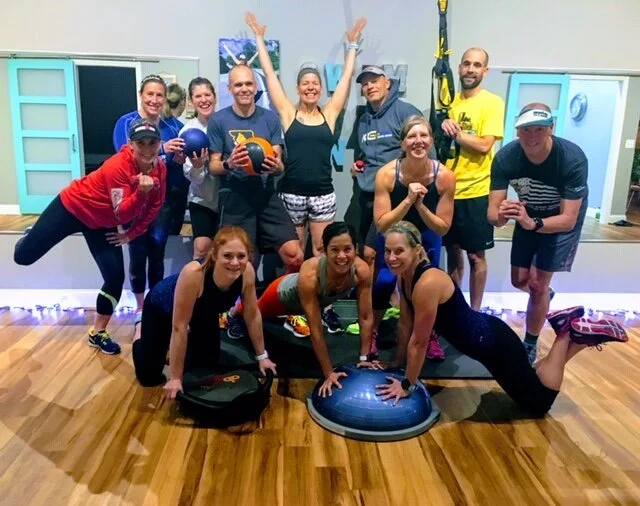
Most of us have heard the buzz words, “strong core.” Is it worth all the hype? Yes! A strong core is beneficial for everyone not just athletes; it can help prevent pain and injury in any lifestyle. Ring a bell from the trifecta articles in October?
Mobility: A Key to Pain-Free Functional Movement and Injury Prevention
Completing the Trifecta to Pain-Free Function and Injury Prevention: Proprioception
We can prevent injury with a strong core; it improves our stability, agility, balance, posture, and coordination creating a foundation for a stronger and healthier body. It also improves efficiency with movement; we gain more power and function from our upper and lower extremities. For endurance athletes, this translates to more power in arm and leg movements while running, swimming, and cycling. For non-athletes this translates into preventing back pain from overuse strains doing household or work related tasks.
Contrary to popular belief, a strong core isn’t limited to strong abs. Our core encompasses the entire cylindrical column of muscles ranging from above the shoulders to below the hips. The proper way to engage and strengthen this range of muscles is with slow, intentional and controlled, quality movement patterns.
Coach Amy has designed a core strengthening class for both beginners and advanced athletes. These classes incorporate a combination of progressively challenging dynamic and functional exercises to build control for activities of daily living and sport.
Our Phoenix Core Winter session is 8- weeks long and begins January 7th. Classes are held at CoachAmyPT on Tuesdays at 6:00 p.m. Commit to feeling stronger, moving better, and preventing injury in the New Year. Spots are limited!
Inflammation Part One: Aid and Control Early Inflammation

Most of us believe inflammation is detrimental. But the truth is, inflammation is the body’s healthy reaction to injury and disease. The body releases critical substances that stimulate the body to repair, heal and fight off disease.
Inflammation is a natural defense mechanism that increases blood flow to the injured area. Blood flow carries in white blood cells for repair and transports dead, injured cells away. This process usually take 8-10 days once the stimulus for injury is eliminated. Sometimes the source of injury is obvious, like a sprained ankle, but some sources can be elusive. It could be poor posture, repetitive motions or dysfunctional mechanics in the workplace, hobby or sport. Coach Amy helps identify tricky sources of injury and modifies activity to prevent additional tissue damage.
Patients can initiate early control with ice in the first 24 hours of injury. Moist heat after the first 24 hours with compression and elevation can help the blood flow. The benefits of NSAID's and over-the-counter anti-inflammatories are controversial. While they can help control pain, they can also interfere with the powerful early healing process associated with inflammation.
Coach Amy uses dry needling techniques to enhance and control the early inflammatory process. While acute (early) inflammation benefits the body, lingering inflammation can be harmful. Check out next week's post to learn more about identifying and combating harmful, persistent inflammation.
Our Winner Jessica Watkins Conquered Injury to Complete 100 Mile Ultra Marathon!

Thank you to all of our patients who entered the #igotmyfixcapt competition during October and November on social media. We were inspired by each and every story filled with strong willed spirits and amazing feats! The common thread through each testimony was that by fighting to overcome limitations and injuries, each and every person grew stronger, faster, tougher, and better. Our winner of the Scheels gift card and this year’s “title” is Jesica Watkins. We share her story:
“In 2016 I pulled my hamstring but the stubborn runner in me ignored the injury and continued on training and running, only causing other problems that I wasn't aware of yet. In 2017, a year later, I decided it was time to heal the injury and I went to 2 physical therapists and 1 chiropractor trying to figure out what was wrong and how to fix it. Nothing they did helped me. I finally found Coach Amy somehow while searching online, and thought that I would give it a try. Within the first 5 minutes of seeing her, I had hope. She said "Oh I know exactly what this is and how to fix it!” I was ready to do anything and everything she told me to do to get better, including stopping running.
I followed her plan to a ‘T’ and within just two weeks of seeing her I was already noticing a difference. I was ecstatic! Months of hard work later, we started to gradually build into running. About 5 months into seeing her, I ran a half marathon followed by a full marathon a few weeks after that PAIN FREE! It was amazing. Fast forward to now, I just completed my first 100 mile ultra marathon, injury free. I have remained injury free since the day I started seeing her. She is so full of knowledge and experience. I can wholeheartedly recommend anyone and everyone looking for a physical therapist to see Coach Amy because she will help you if you just follow the plan! I can't thank you enough, Amy!” #igotmyfixcapt
Completing the Trifecta to Pain-Free Function and Injury Prevention: Proprioception

Welcome to the third installment of our trifecta to pain-free function and injury prevention! While there are many components to injury prevention and healthy movement, our trifecta covers mobility, stability, and, in this installment, proprioception.
Proprioception incorporates agility, balance, and coordination.
You know about the five senses: hearing, taste, sight, touch and smell. Proprioception is your sixth sense. It is your unconscious and conscious ability to know where a given body part is in space. For example, if you close your eyes and your friend moves your thumb, you can report, without looking, that it is pointed up or down, left or right.
Your sense of proprioception provides approximately 70% of your ability to react to your environment. That's a lot more than the mere 10% provided by sight and 20% provided by hearing! Your muscles and joints relay information to your brain. Your brain uses that information to decide what action to take and relays it to your muscles and joints.

If the proprioceptive system is damaged or out of practice, connections are disrupted. Your muscles can’t fire at the right time to make use of the strength, even with you have strong muscles around your joints. This can lead to poor balance, lack of coordination and decreased agility. These deficits can cause and/or contribute to injury and negatively affect sports performance.
Proprioception can be disrupted with injury, surgery and declines with age. We all depend upon this sense operating at capacity for daily activities such as using stairs, standing and putting on shoes and socks. We require it for work-related functions, hobbies, and sports. Imagine a quarterback with a recent knee injury that has disrupted proprioception. If his brain cannot interpret which direction the knee is moving and adjust, he is at risk for injury when trying to pivot on one foot to throw the ball.
The great thing about proprioception and balance is that we can restore it! I use a combination of progressively challenging dynamic and functional exercises that stimulate the proprioceptive system. I balance proven exercises with exercises that I create and personalize to each unique patient and case. In some cases, neurological dry needling is helpful to facilitate the function of the proprioceptive pathway.
About Physical Therapy. Physical Therapy addresses function in daily lives, whether it’s our ability to unload the dishwasher, walk without a limp, or run an ultra marathon. Physical therapists work not only with injured patients but also preemptively with patients to prevent injury. This can prevent long periods of pain and time off of sports and work. Periodic PT visits focusing on prevention save time and money on the higher frequency therapy appointments required with chronic injuries.
Stability: Another Key to Pain-Free Function and Injury Prevention

Just because we can, doesn’t mean we should! We may have the ability to lift the laundry basket and carry it up a flight of stairs or run ten miles, but without proper body mechanics and stability, injury can ensue.
Prevention and rehabilitation from injury involve addressing mobility, strength, and balance. We discussed mobility last week. Achieving proper mobility of the tissues doesn’t ensure safety. In fact, some people have too much mobility but can’t support the joints or get power from their muscles. This causes them to compensate elsewhere and/or fail to support the joints. This is when injury can occur.
Let’s use another rubber band analogy. Imagine shooting an older rubber band that is super stretched out, maybe even saggy or brittle. When we pull back on it, the band stretches only a bit. The rubber band has lost power and elasticity, and it will not fly very far. Its mobility is useless because it lacks integrity.
In our mobility article we discussed how people who sit for long periods of time at desk jobs, lose mobility in key muscles on the front of the body with sitting. The opposite is true for the muscles on the backside of the body, namely the glutes (bum muscles). If poor posture is involved, the muscles of the back and the front of the neck elongate as well. These muscles are like the rubber band: they become too long and weak. As a result, they do not provide adequate support (stability) during activities like walking with the dog, kicking the ball with the kids, and playing sports. This is when injury is possible.
Many activities that involve holding a position for a long time can cause muscle imbalance and reduced stability. For example:
Wearing high heels often or for an extended period of time. This creates a long term stretch for the muscles at the bottom of the foot and front of the hip. These lengthened muscles weaken when engaging in activities like walking the dog, running, climbing steps, and attending exercise classes. Injuries such as pain in the lower back or the bottom of the foot can surface.
Participating in triathlons, as mentioned in our mobility article. Being in aero position for 100 miles stretches the back muscles and glutes for hours. These lengthened muscles are needed to support the back, and for power with push off for the 26.2 mile run segment.
Patients recovering from abdominal surgery, such as a cesarean section. It takes time for abdominal muscles and tissues to heal from surgery. Gradual strengthening is required. These weakened muscles cannot support the spine adequately for activities of daily living, including bathing and lifting the baby, or even walking. Injury of the back and hips can occur.
One of the first things I assess when evaluating a patient is how they move. I look for faulty movement patterns that could cause injury or worsen a current injury. Poor mobility or lack of stability (or both) may contribute to the problem. I attack a lack of stability with progressively challenging dynamic and functional exercises within the patient’s tolerance. I like to use a combination of proven exercises, with exercises that I create and personalize to each unique patient and case. When pain is contributing to weakness, neurological dry needling can be helpful. Active Release Technique may also be used to treat injured joints and ligaments that result from lack of stability.
Faulty movement patterns can also be the result of poor proprioception and balance. Stay tuned for more on that in our next post!
About Physical Therapy. Physical Therapy addresses function in daily lives whether it’s our ability to unload the dishwasher, walk without a limp, or run an ultra marathon. Physical therapists work not only with injured patients but also preemptively with patients to prevent injury. This can prevent long periods of pain and time off of sports and work. Periodic PT visits focusing on prevention save time and money on the higher frequency therapy appointments required with chronic injury.