
How to Treat Injury with Deep Heat

What is Deep Heat?
I recommend deep heat for most chronic pain and late-stage acute injury cases (48-72+ hours) to treat inflammation and pain and improve blood flow. Moist heat penetrates deeper than dry heat like an electric heating pad and can reach injured structures below skin level.
Types of Moist Heat
Moist hot packs are available at drug stores and online, but my favorite method is a 20-minute soak in a hot water bath with magnesium sulfate, known as Epsom "salts."
Dissolve 2 cups of 100% magnesium sulfate per gallon of hot water (100-102 degrees). Check your owner's manual before adding to hot tubs and jetted tubs.
Currently, no clinical trials support that magnesium sulfates can penetrate the skin; however, there is plenty of circumstantial evidence from athletes and patients that it helps!
“But Coach Amy, I hate soaking in a tub.” If you don't like soaking your whole body in a tub but want to treat your ankle/foot or lower leg, try a foot bath or a large bucket.
Caution
Take care if you have sensitive skin before using Epsom Salts. Soak a small body part in the magnesium sulfate bath first to see if you get an adverse reaction. A hot water soak is quite beneficial even without the Epsom.
Contraindications to Soaking in a Hot Tub or Bath
Diabetes
Rash
Low blood pressure
Blood vessel disorders
Rheumatoid Arthritis or Gout
Heart disease
Pregnancy
Seek advice from your healthcare provider if you are unsure whether soaking in a hot bath is safe.
If symptoms persist and impact your ability to function, schedule an appointment with Coach Amy. Missouri and Kansas approved direct access to physical therapists, meaning you do not need to go to a doctor when you seek physical therapy.
The application of heat is all about controlling inflammation. To learn more about inflammation and its impact on injury, health, and pain, check out Coach Amy’s three-part series:
Ask Coach Amy - What's a Flare-up?

I was doing great, and now I am in pain again. What happened? Am I ever going to get better? - anonymous patient
It is common to suffer a setback when rehabilitating an injury. I refer to these as flare-ups. They tend to happen when you start feeling good enough to resume more activity and when you no longer have a constant reminder of your injury.
What is a flare-up, and what causes them?
A return of your original symptoms is a sign of a flare-up; this might be pain, less range of motion, or decreased strength. Flare-ups typically occur when resuming activity "too much, too soon."
Let's look at three "flare-up" scenarios in a tennis player recovering from lateral epicondylitis (tennis elbow) - an injury to a tendon in the elbow. For the first time in months, she can grip her Yeti water bottle and swing her racquet without pain.
Scenario I - Too intense (resistance or speed)
She returned to strength class and used the same amount of resistance she did before her injury.
Scenario II - Too long
She played a competitive 90-minute tennis match.
Scenario III - Too frequent
She played tennis five days in a row: a private lesson, a group lesson, and three friendly matches.
It is not uncommon to see a patient simultaneously make all three mistakes. In each example, this patient resumed her previous activity level too soon. There was too much load on her tendon, resulting in a flare-up.
How do I avoid flare-ups?
Return to activities gradually to allow for adaptation to new loads. What does this mean?
Return to one activity at a time to prevent overloading and to assess which exercise or motion is most likely responsible for the flare-up. For example, the tennis player could choose between strength class or tennis until her tendon is stronger.
Return to activities with at least one day of rest/recovery between bouts to provide adequate time for the injured area to adapt to new loads and assess your body's response. For example, the tennis player could resume tennis lessons or matches three days per week with a rest day between each bout.
Return to activities with low intensity, gradually increasing as tolerated. The tennis player in our example could resume easy play, friendly non-competitive matches, or tennis lessons starting with 30 minutes at a time.
Does a flare-up mean the injury is back or worse, that it will never get better?
Not necessarily. If the error in return to activity is not prolonged or excessive and the flare-up is mild (less than 3/10 on the pain scale), you're unlikely to be re-injured.
Sometimes it is hard to rate your flare-up severity on the pain scale, especially if you are worried about it. Patients often wonder if their flare-up is in their heads. And sometimes, it is!
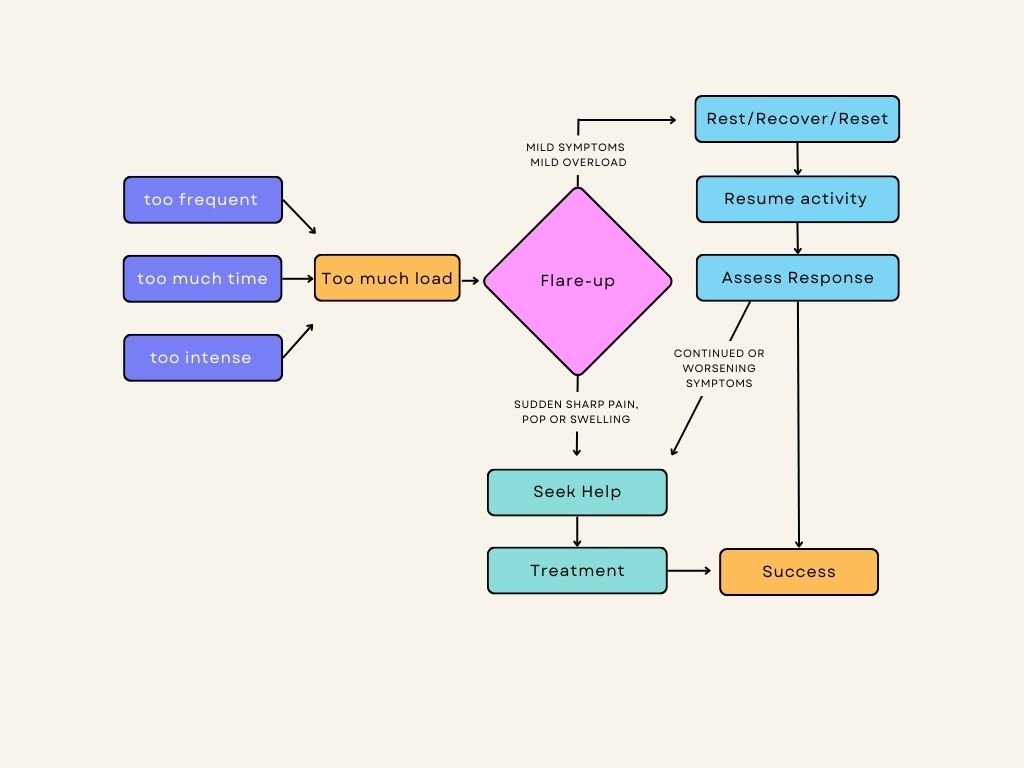
Worry and concern can create phantom injury pains and inflate a mild symptom into the scary red zone. Follow the steps outlined in the flowchart below to address a flare-up.
Who gets flare-ups?
Flare-ups can happen to anyone, including professional athletes, coaches, and even physical therapists! We used a tennis player in our example, but the rules apply to most injuries we see in orthopedic physical therapy.
For example, our flare-up example also applies to a mom with pain in her shoulder when she reaches back in the car to grab her purse. It also applies to a patient with back pain when she unloads the dishwasher and the triathlete that experiences numbness after 20 min on the bike.
What should I do in the event of a flare-up?
Take a few days to rest, recover and reset. Treat symptoms, reset expectations, and resume activities gradually. Schedule an assessment and treatment with your physical therapist if symptoms persist or worsen after a week.
If the return to activity is excessive or the flare-up is severe, you might need more time to recover and some physical therapy to get over the hump.
If you suffered sudden, sharp pain, felt a pop, or sudden loss of stability, you may have re-injured the structure or damaged a new one. See your physical therapist or other direct access health care provider as soon as possible.
Flare-up Take Aways
Flare-ups are normal and happen to everyone.
Take steps to avoid flare-ups.
Rest, recover and reset when a flare occurs.
Seek help if needed.
Need help?
CoachAmyPT can help you recover from your flare-ups!
Wake Up Sleepy Glutes

Strong, healthy glutes are essential for running; they are the primary driver and power source. Yet, sometimes despite their good health and adequate strength, they fail to perform. The main culprits are sleepy glute muscles and an unstable platform. In a two-part series, How to Fire Up Your Glutes, Coach Amy provides a guide to overcoming these issues and getting the most out of your running glutes. In Part I, she explains how glutes can fall asleep on the job and how to wake them up.
Running with Coach Amy and the Roadrunners of Kansas City
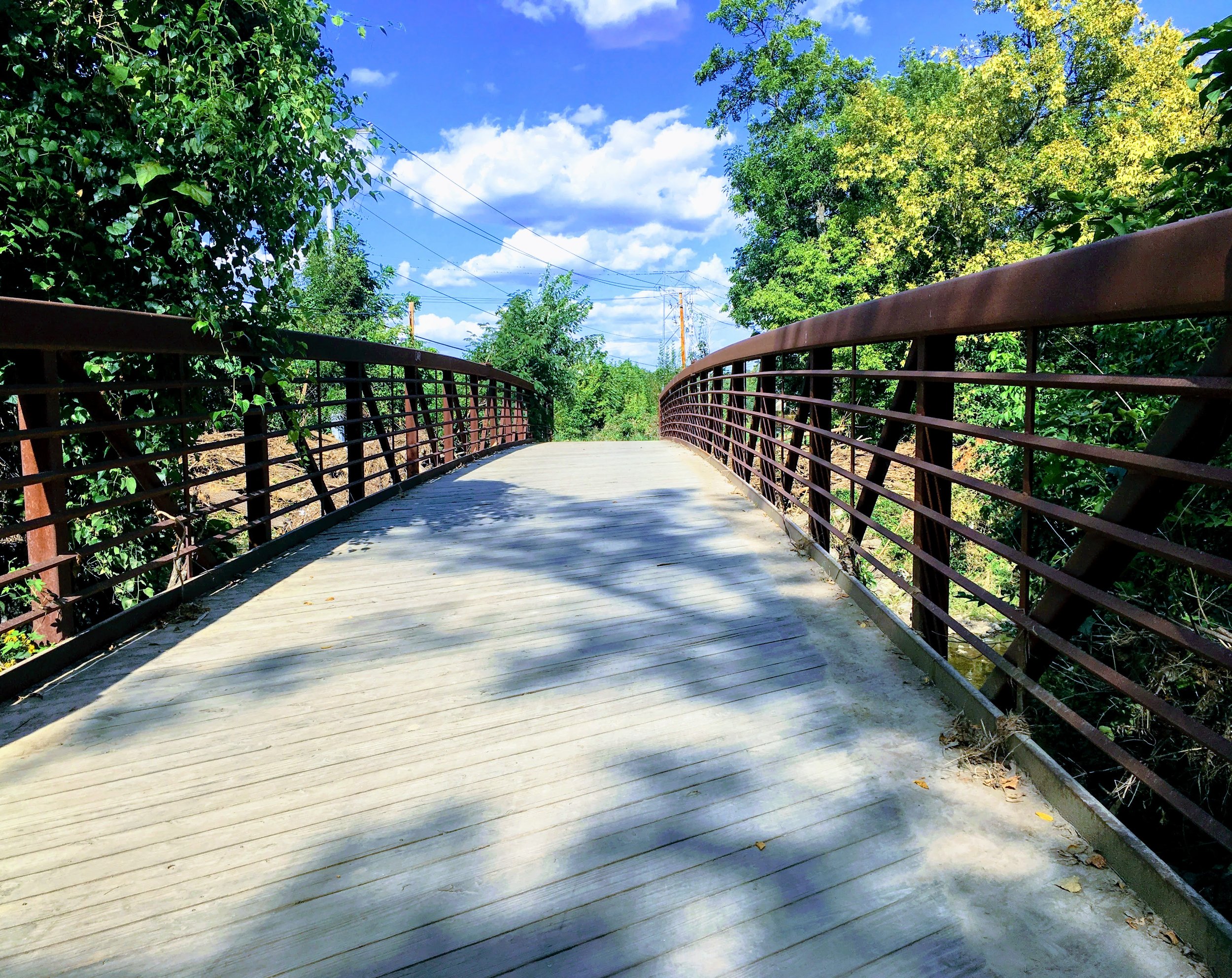
Running is safer and more fun with a group! Join Roadrunners of Kansas City for supported group runs this spring on Saturdays at 7 AM for only $25 a month. Details are on the Roadrunners of Kansas City website. Click on the button below to learn more.
Coach Amy is Collecting More Used Run Shoes for ScrapsKC
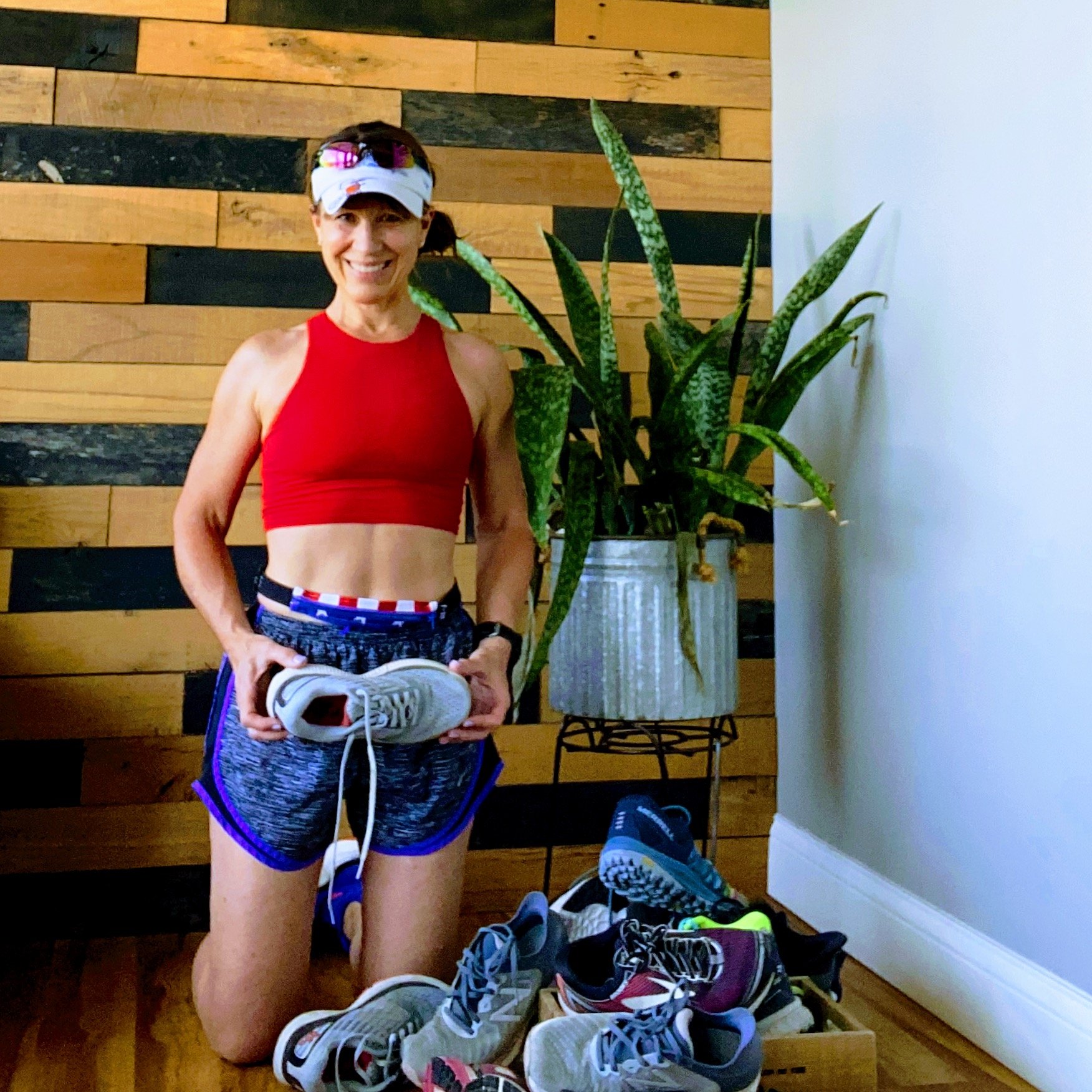
After our successful event with ScrapsKC last October, patients of CoachAmyPT and Roadrunners of Kansas City athletes continue to donate their used run shoes.
ScrapsKC provides food, clothing, employment, and companionship to the homeless in Kansas City. The homeless walk ten to fifteen miles a day and often don't get replacement shoes regularly. Your donation of used adult running shoes can make a significant difference in the life of a person experiencing homelessness.
We will continue to accept donations through June 1st. If you’d like to add to the growing donation pile, bring your used run shoes to your CoachAmyPT appointment or a Roadrunners of Kansas City group run in May.
Rewire your Run with Coach Amy's Run Specific Strength Class

Coach Amy’s Rewire your Run class includes a combination of neuromuscular drills, Pilates-style mat work, and functional exercises specific to running. We move slowly and intentionally in this class with internal and external resistance (bands, weights).
Moves are geared toward particular muscle groups and neuromuscular patterns specific to running but are also beneficial to non-runners.
You will walk like a penguin, crawl like a bear, and kick like a donkey.
This is not a cardio-intensive class. Our focus is on quality and accurate motion that builds strength and stability safely and productively.
Thursday nights 6:00-6:45 PM at the CoachAmyPT clinic.
Classes are held in 4-6 weeks sessions by invitation only. If you are interested in the course, please contact us so we can add you to our invite list! Space is limited.
Is Run Streaking Safe?

Coach Amy discusses the safety of run streaking in her recent article, Streak Runner’s Beware. https://bit.ly/run_streaking.
Coach Amy Published in International Journal of Sports Physical Therapy

The most rewarding aspect of my career is patient treatment, but when the rare opportunity to conduct research comes along, I take it! During the dark days of the Pandemic shutdown, I collaborated with professor Janice Loudon to study the training habits and running-related injury rates in female runners over age 40. The International Journal of Sports Physical Therapy published our manuscript: Loudon J, Parkerson-Mitchell A. Training Habits and Injury Rate in Masters Female Runners. IJSPT. 2022;17(3):501-507.
Five Tips for Fitting Your Physical Therapy Home Exercise Program into A Busy Schedule
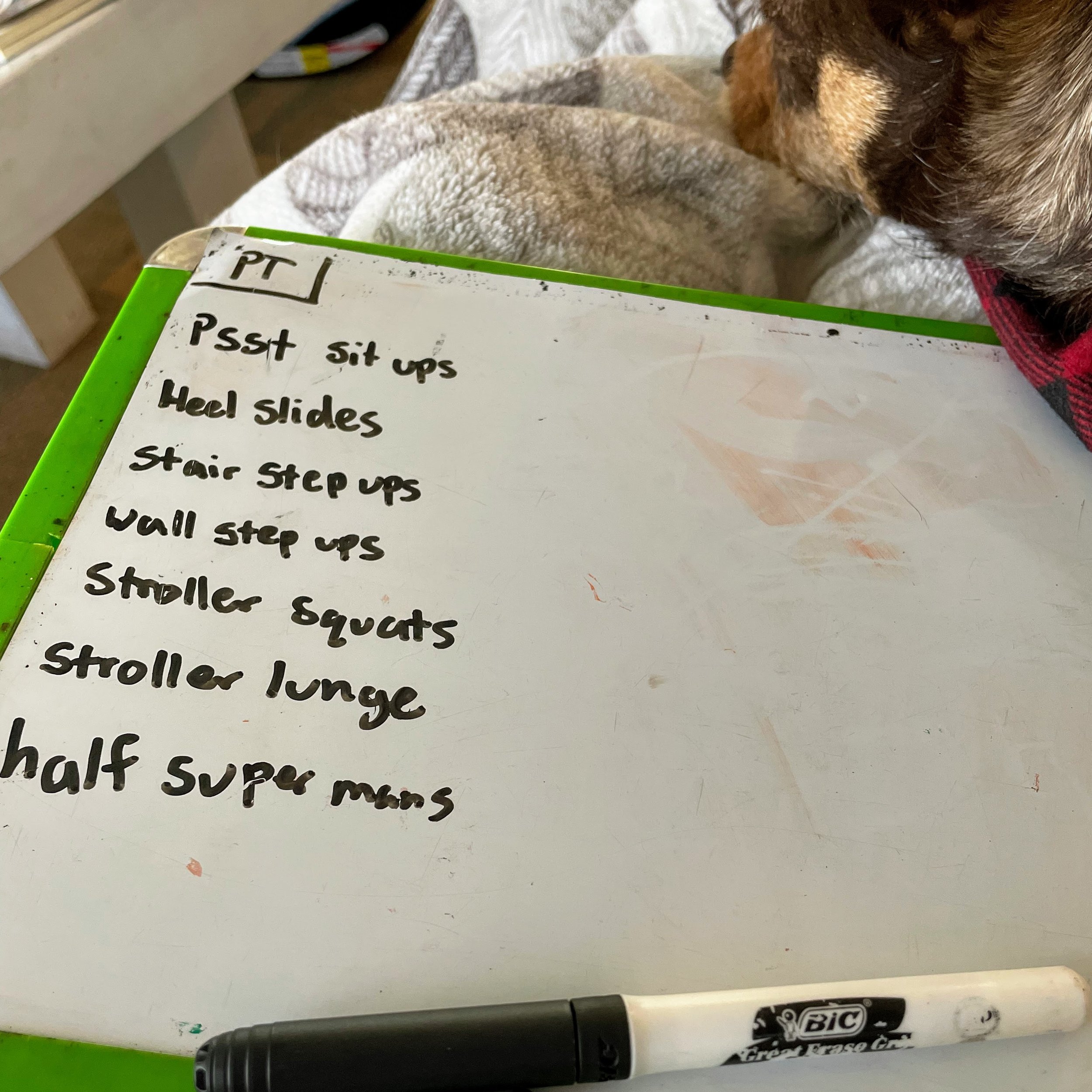
Physical therapy is time-consuming. Besides managing appointments, most treatment requires the dreaded home exercise program. Carving out time in an already demanding life schedule is a challenge. But, it is doable and critical for successful rehabilitation.
On top of work, a new baby, volunteering, and managing a home, one patient exclaimed, "I'm just trying to survive right now." You are right! We can't ignore the baby, broken water pipes, a return to work, or lack of sleep to squeeze in PT exercises. I have to admit, that would be the first thing I'd want to throw off my to-do list. But, to achieve success with daily functional tasks safely, without pain and further injury these exercises are a necessary evil; they are the broccoli of function.
It is tempting to come to the clinic and just let the "PT do it." But in most instances, that will not lead to a full recovery or long-term success and will undoubtedly lengthen the time it takes to get well. There are at least two people on the rehab team: the patient and the therapist.
So team, how do we manage these exercises? Here are a few tips from Coach Amy:
Spread out the load.
Make a checklist.
Get help.
Ask your PT.
Get creative.
Spread out the load.
In most cases, doing a few exercises at once and spreading them out throughout the day is not harmful to the process. When it comes to training the body, this is beneficial. Taking 5-10 minutes here and there to do a few at a time will allow you to fit it into those "down times" that occur between all the busy. It will also allow you to slow down, focus and maintain quality for each repetition instead of trying to rush through all the exercises into one chunk to get it done.
I have a patient who does her single leg balance exercises every morning while brushing her teeth!
Make a checklist.
Take your videoed exercises and make a list for each one that you check off throughout the day as you get them done. Your list may be on old-fashioned paper, a whiteboard, or a digital app. Whatever you choose, don't leave the list in your head. Make sure you get to physically check it off and see it visually when you complete each one.
Get help.
Enlist family, friends, and children to help you get it done. If kids are old enough, set them up with their version of "PT" so you can do it together. Spouses will surely help keep the house from catching fire if you ask them to cover you for 10 minutes (v.s. 40 min) while you find a corner to do two sets of one of the exercises on your list.
Ask your PT.
Has your list grown from 5 exercises to 25 throughout your treatment? EEk! Sometimes we lose track. Most therapeutic home programs do not need to be lengthy. But, it does depend upon the nature and complexity of your injury and your goals. If your program has taken over your life, be sure to talk to your PT. Go through your list together, eliminate those no longer needed, and select the most relevant and important ones.
Get creative.
Are walking lunges on your list, but you have a cranky infant that needs to stay moving? Let's lunge while pushing a stroller! Always check with your PT before modifying an exercise to ensure it is safe.
Broccoli may be hard to get down, but if you prepare it right, it isn’t so bad. Make a plan, enlist the help you need, and fit that home exercise program into your life. You will be really glad you did.
How have you managed to fit in your prescribed PT exercises? We want to hear from you! email us with your creative solutions and recipes for success.
Respect your Plantar Fascia or Else!

"I've got the plantar fascitis” is not an uncommon statement uttered amongst runners huddled around an aid station. It presents as pain in the underside of the heel or arch of the foot. If left untreated, it can lead to bone spurs, tears, or even rupture of the plantar aponeurosis, which happened to me. Read my story here. Additionally, the hip, back, and knee may become injured as they work hard to compensate for an ineffective plantar aponeurosis. I can also personally attest to that!
The plantar aponeurosis or fascia is usually not the only structure inflamed or injured when a runner has foot pain. Often, the intrinsic muscles of the foot are inflamed as well. And indeed, not all foot pain or heel pain is plantar fasciitis, even if Dr. Google diagnosis it. Always seek advice from a medical professional such as a physical therapist to evaluate and treat your foot pain.
But what is this plantar structure, and why is it important? It is a fibrous band that spans the bottom of your foot. It connects your rear foot bone (calcaneus) to the end of your long foot bones (metatarsals). It is more complicated than this, but I'm attempting to keep this explanation brief.
The plantar aponeurosis commands respect because it supports your weight and is critical for a safe and efficient running form. When you run or walk, the aponeurosis prevents your arch from collapsing. It attenuates the forces of your body weight and the ground, and when you are running, those forces are anywhere from 3-6 times your body weight!
The plantar aponeurosis is also critical to the timing of your foot movement when you walk and run, from the moment your foot hits the ground to when it pushes off. Think of this aponeurosis like the air in a bike tire. The tire supports the frame and absorbs shock as it travels over various surfaces. The ride is rough, and the bike is difficult to steer if it is too low on air. Running on an inflamed or dysfunctional plantar aponeurosis is like driving a car or riding a bike with a flat tire.
Like most running injuries, plantar fasciitis is typically due to a combination of factors. Below are some that contribute.
too much pronation or not enough pronation
rigid foot (high arch, poor foot mobility)
tight calves/achilles tendon
poor neuromuscular skills required for running
weak or un-plugged calf, hip or knee muscles
Take it from me; just like driving or biking with a flat tire, running with one is a terrible idea. Take foot pain seriously and consult a physical therapist, preferably one who specializes in running. Coach Amy evaluates and treats foot pain based on a biomechanical model which focuses on the cause and prevention.
You can follow Coach Amy’s experience with a plantar rupture on Instagram @coachamypt or subscribe to her running blog, Diary of a Happy Runner.